A community center sharing its spaces among dozens of groups with diverse activities needed to manage growing demand without losing openness. Whatspot helped move bookings from manual coordination to a system that combines self-service with manager oversight.
„Before, a single booking took up to five emails. Now it is many times faster."
— Jakub Šandera, rental manager
Before vs. after
Before:
Every booking required several emails or phone calls, manual availability checks, and frequent scheduling conflicts between events.
After:
Bookings are made in a few clicks, everyone works from a single calendar, and the manager stays in control through an approval process.
About the client
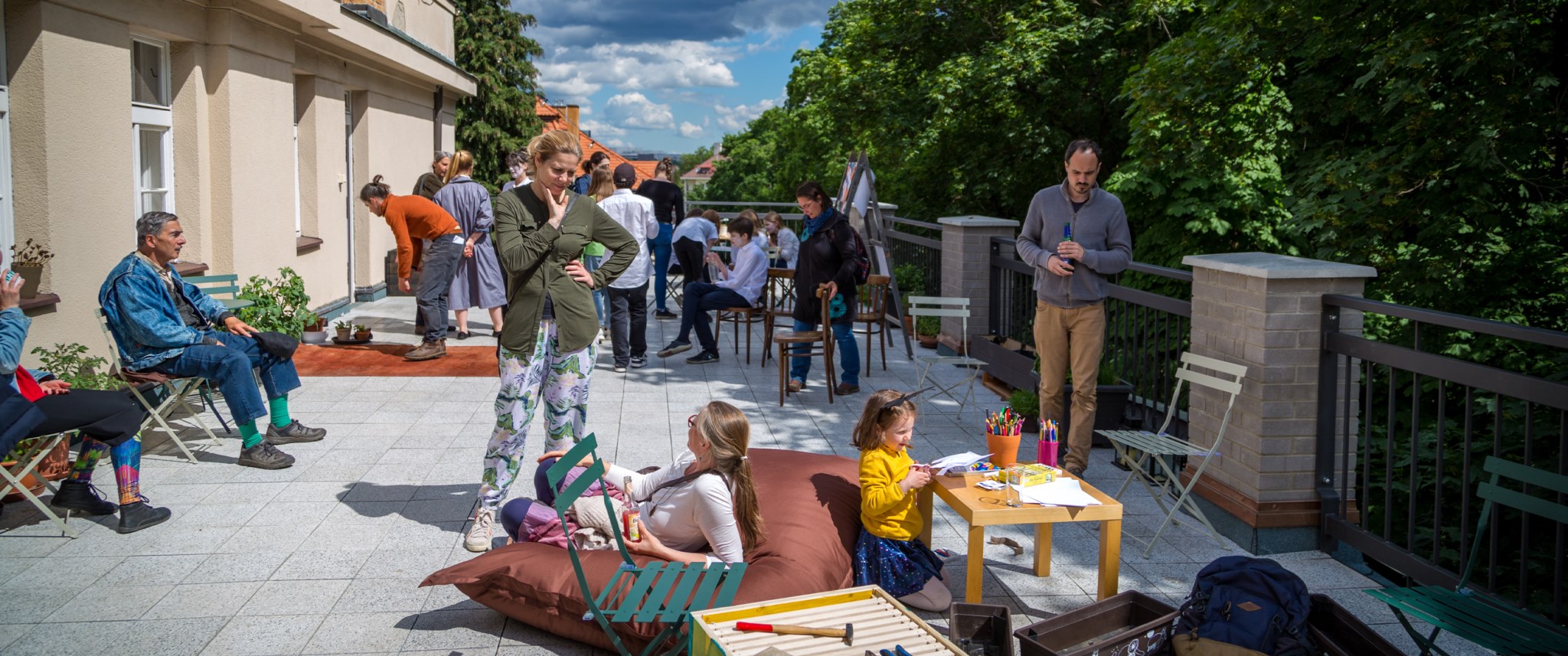
Smíchov Community Center is a multifunctional venue in Prague that opens its facilities to the public for cultural, social, and educational activities, serving as a platform for neighborhood life.
The spaces are used for religious services, church activities, neighborhood events, yoga classes, music programs, concerts, dance evenings, non-profit programs, and commercial rentals.
This diversity is the center's greatest strength, but it also places high demands on coordination: each mode comes with its own rules, expectations, and pace.
„Community is a way of life. A community space is a space for belonging – one that can be mine and someone else's at the same time."
— Maroš Klačko, project initiator
The challenge: growth that could no longer be managed manually
„More tenants meant more communication, more frequent errors, and less overview."
— Jakub Šandera, rental manager
What once worked through "informal arrangements" started to break down as the number of events multiplied and more groups began using the space.
Every new booking triggered a series of emails, phone calls, and manual availability checks. As activities grew, so did conflicts and confusion about what was happening where – especially during evening hours when multiple events competed for the same spaces.

A typical week in operation
Monday–Thursday
Evening peak hours
Highest space utilization. Classes, rehearsals, community meetings, and smaller events run in parallel – and this is where conflicts are most likely to occur.
Off-peak mode
Quieter daytime operation
Capacity is more relaxed during the day. Part of the space is intentionally left open for preparation, cleaning, and operational rearrangements.
External inquiries
Access via the public calendar
A potential user first checks availability. The manager then enters the booking into the system, eliminating most “Is it free?” inquiries.
Team coordination
The manager's role
Internal bookings are self-service, but the manager approves them. This gives full visibility over the week and lets the manager handle only real exceptions.
The solution: self-service with oversight
Whatspot created a single source of truth for both internal and external bookings.
Instead of fragmented communication, a clear process emerged: users book independently, and the manager retains final control.
Internal bookings
Internal users – such as instructors or individual groups – now select available slots in the calendar on their own. A booking is created in seconds, much like when companies book meeting rooms . The manager simply approves it, preventing conflicts.
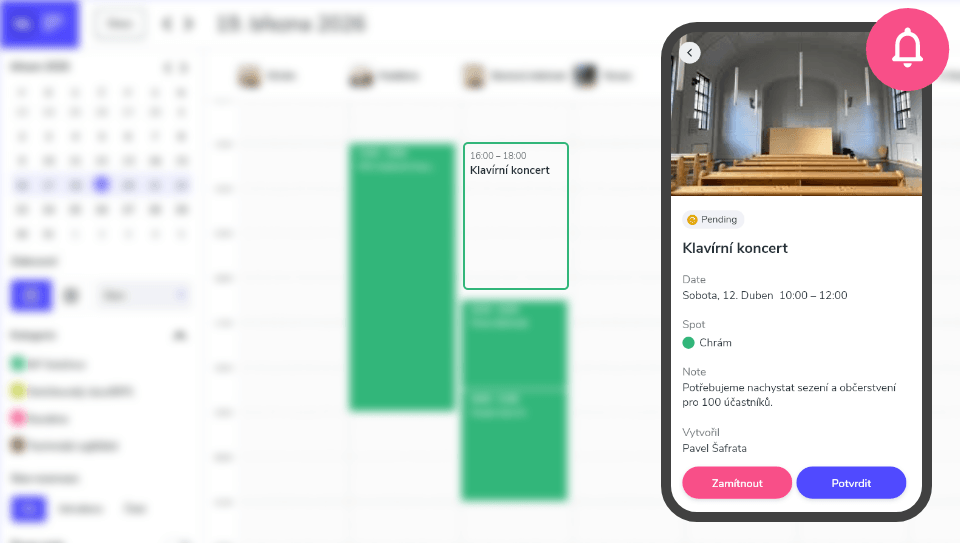
„Groups make their own bookings and I simply approve them."
— Jakub Šandera, rental manager
External bookings
For external inquiries, a public availability view without login. Prospective users check availability themselves, eliminating most "Is it free?" inquiries and making arrangements significantly faster.
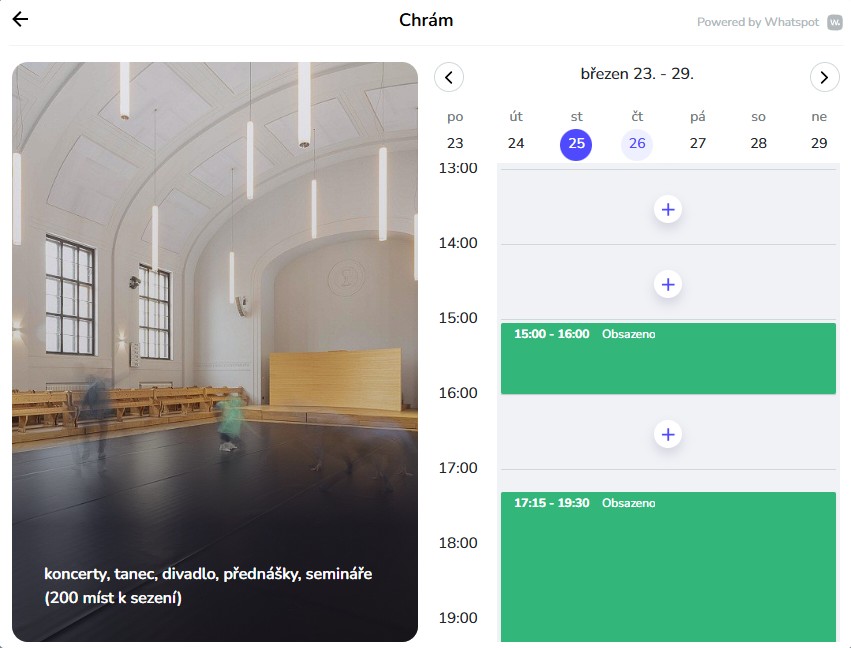
„You just look at the publicly available calendar on our website and the person immediately knows whether the space is free."
— Jakub Šandera, rental manager
The key moment: control over conflicts
It is not just about a calendar – it is about managing a real space where activities affect each other. A typical example: a film screening in the café × a quiet event in the chapel, or an art opening or a talk in the gallery × a dance evening or concert in the adjacent space.
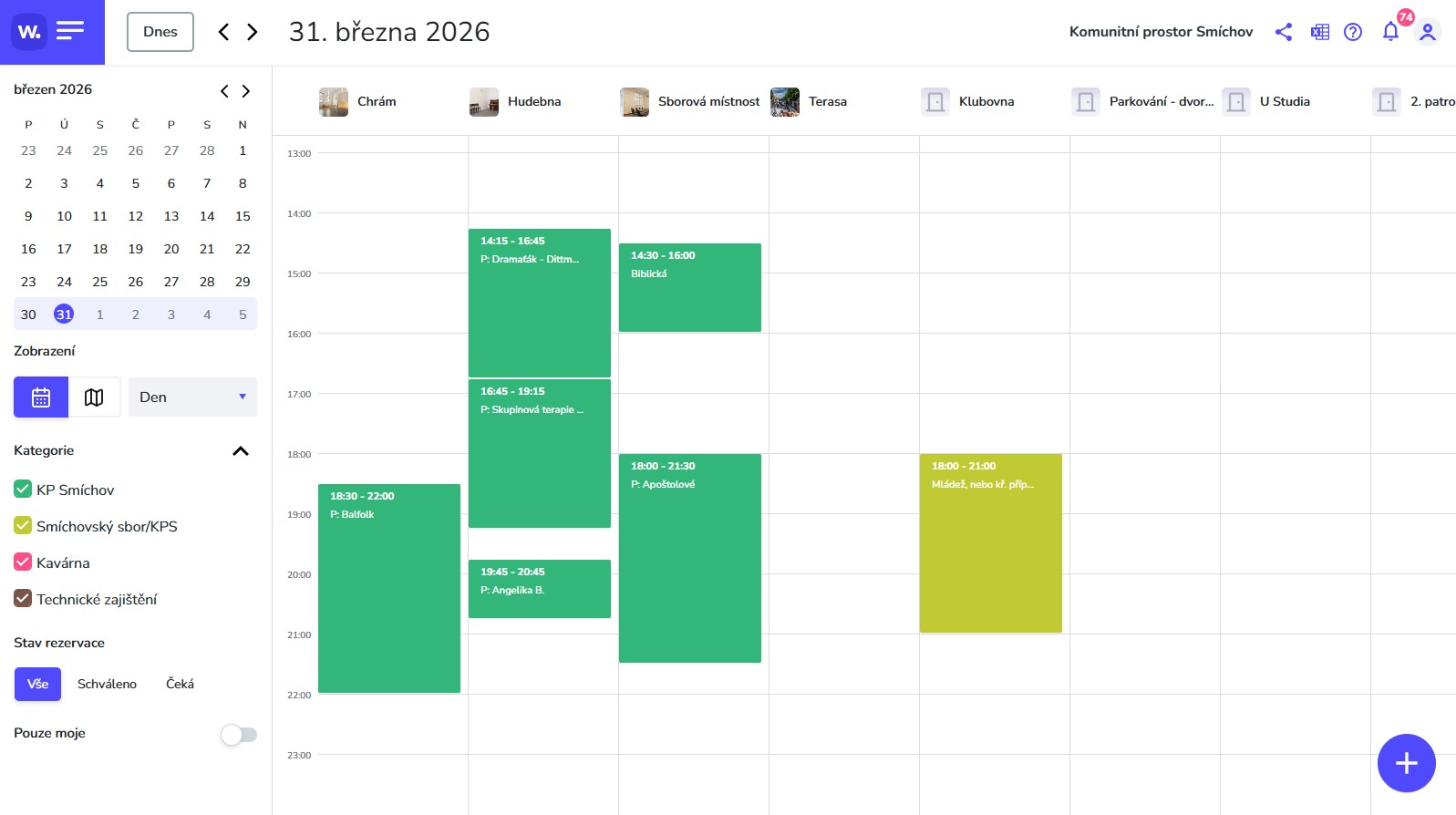
Because the manager sees all bookings in one place and approves them, conflicts can be prevented before they arise.
„I can see what's happening where, and I can prevent conflicts before they become a problem."
— Jakub Šandera, rental manager
The result
„Today, groups book the space themselves. Through the approval process, we ensure conflict control and internal coordination between spaces."
— Jakub Šandera, rental manager
After implementing the system, the entire way bookings are handled changed. The manager is no longer a "booking operator" but a coordinator who steps in only when needed.
Instead of constant coordination, the process works as self-service, for both internal bookings and external inquiries. And the manager steps in only where control or a decision is required.
In practice, this means fewer emails and phone calls, a clear overview of what is happening where, and the ability to serve more groups without chaos.
Why they chose Whatspot
Before Whatspot, the community center used a booking tool called Skedda. Over time they found it unnecessarily costly given how they actually used the system.
They were looking for a solution that would be simpler, more financially appropriate, and a better fit for their day-to-day operations.
What appealed to them about Whatspot was primarily the ability to combine self-service bookings with manager oversight. Also important was the option to separate internal and public bookings and offer availability without requiring login.
Localization also played a role. A Czech solution from a Czech company meant closer communication, support, and a better understanding of their environment.
„We were looking for a simple, functional system that fits our operations, and a Czech solution was a major added value for us."
— Jakub Šandera, rental manager
Key reasons
- public availability without login
- clear calendar in one place
- booking approvals to control conflicts
- better price-to-value ratio
- Czech solution suited to local operations
Summary
„Whatspot helped transition from manual coordination to a managed process where users book on their own and the manager stays in control."
- fewer emails and phone calls
- better operational overview
- more bookings without losing control